
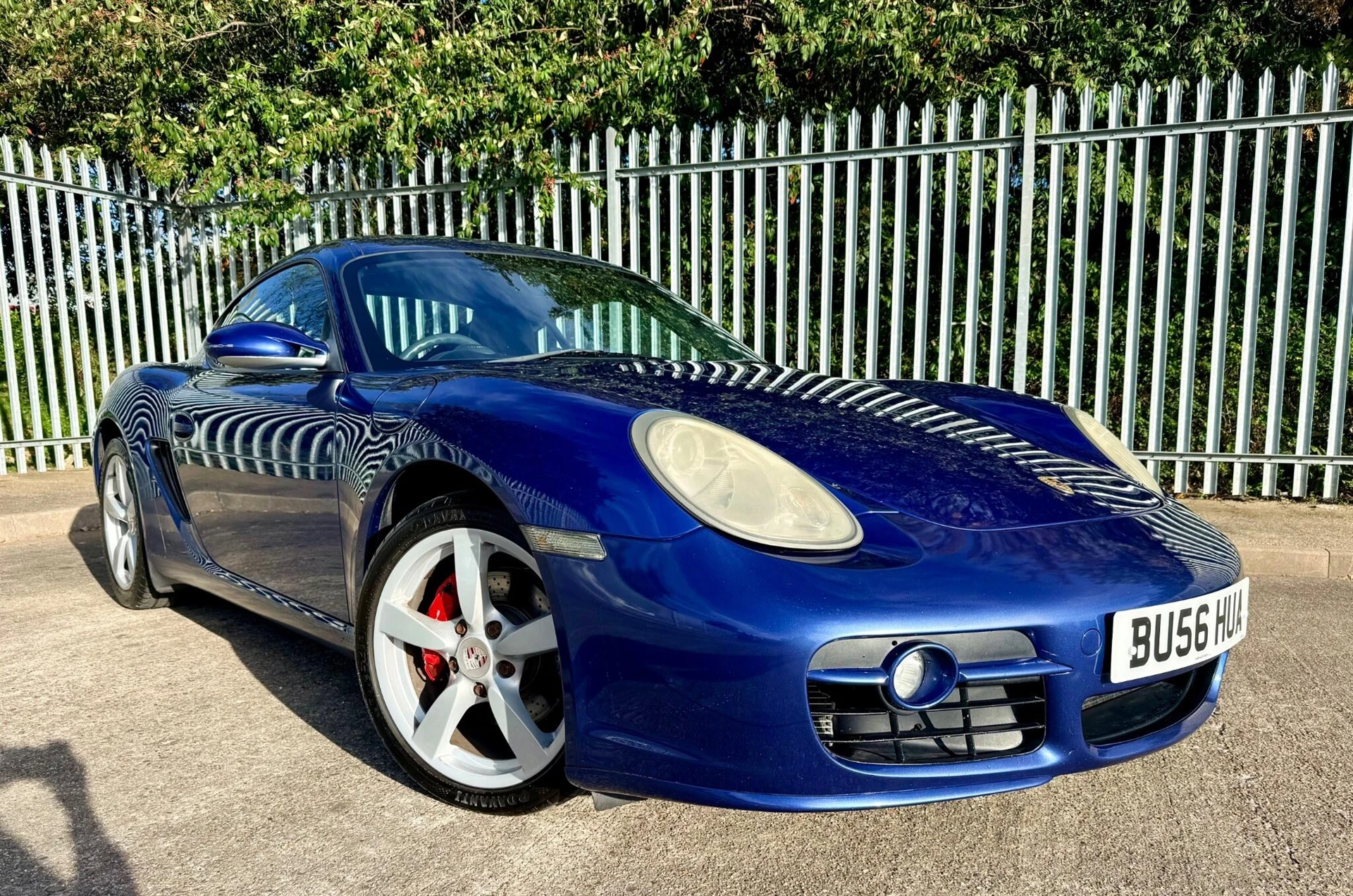
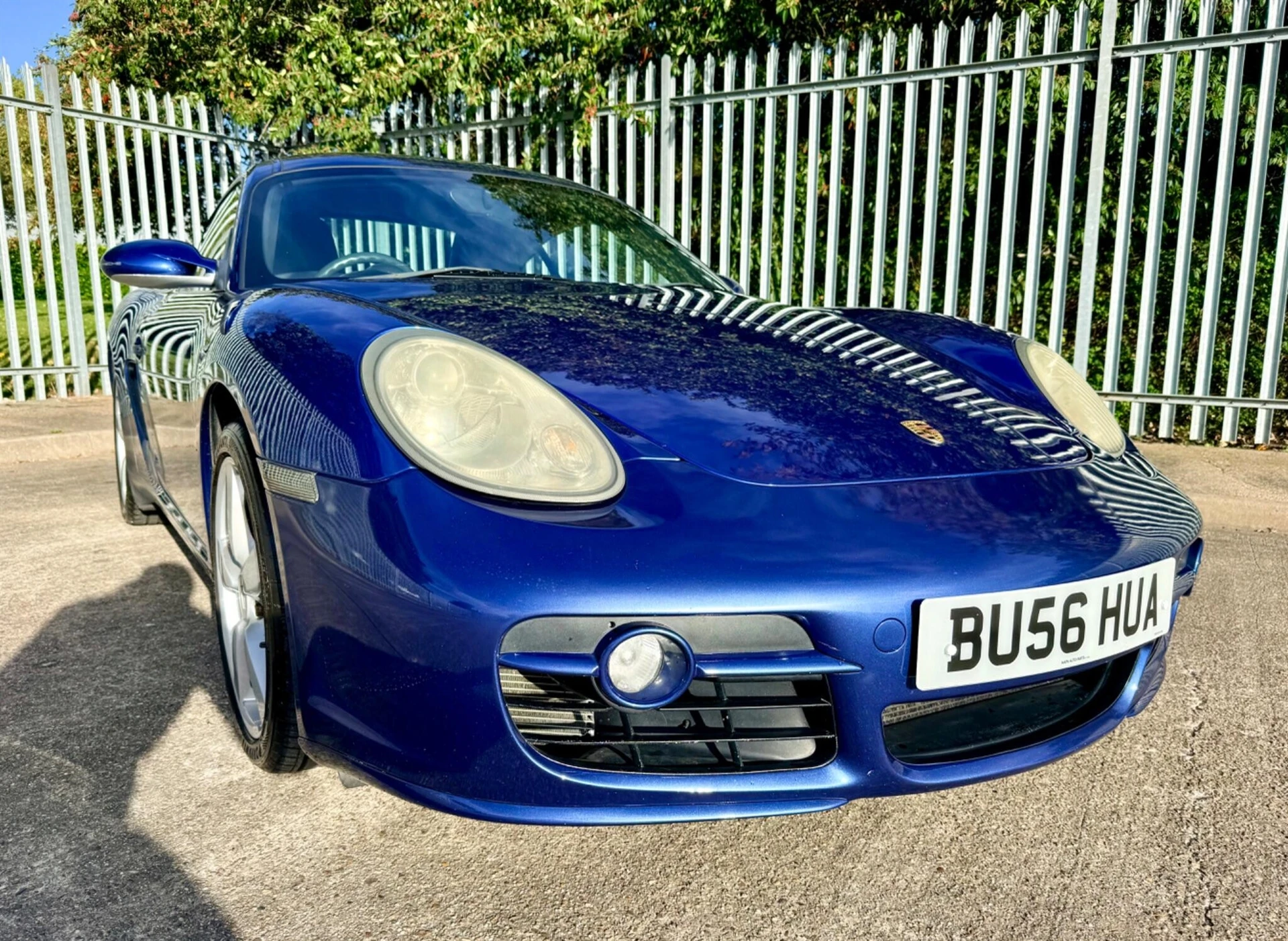
Specification
- Model
- Cayman
- Generation
- 987.1
- Variant
- Cayman S
- Year
- 2006
- Mileage
- 102,000 mi
- Gearbox
- Tiptronic
- Drive
- Rear-wheel drive
- Fuel
- Petrol
- Engine
- 3.4 L flat-six, naturally aspirated
- Body
- Coupé
- Exterior
- Cobalt Blue Metallic
- Interior colour
- Grey (from photos)
- Upholstery
- Not stated
- Wheels
- Silver (from photos)
- Condition
- Used
Values marked “from photos” are not stated in the advert: they were read from its photos and can be wrong. Check them with the seller.
Seller's description
We've used AI, along with customer insights, data from car dealers, and our own Auto Trader data to compare thousands of cars of similar: By using this data to compare similar cars, we can automatically show you what this specific car offers and what makes it stand out. This 2006 Porsche Cayman 987 S represents a well-regarded model within the sports car segment. Powered by a 3.4L petrol engine, this vehicle combines the traditional engineering associated with the Porsche brand with the specific performance characteristics of the 987 S trim. It serves as a practical example of the mid-engine layout that defines this particular generation of the Cayman. The vehicle includes automatic climate control, which helps maintain a consistent cabin temperature regardless of external weather conditions. A notable aspect of this specific model is its low insurance group rating, which is an unusual and beneficial attribute for a car with this level of engine performance. These features combine to offer a driving experience that balances power with everyday usability, making it a sensible choice for those seeking a capable sports car without the typical running costs associated with the class. If you're interested in this Porsche Cayman and have your own vehicle to part exchange? Send us the details of your vehicle so we can give you an accurate valuation! Please note: Auto Trader Intelligence has sorted these features into categories that may not always be accurate. Any features that could not be matched to a category can be found under 'other'. Once the car battery reaches 80% the speed of charge will slow down in order to help protect and optimise the overall battery life. Home charge point: This is the most recommended and most common option. A home charge point is a dedicated device that is installed in your home and provides a faster charging speed than a standard three-pin plug. If you are looking for the fastest and most convenient way to charge your electric vehicle at home, then we recommend installing a home charge point. A 7 kW home charging point is the most common type of home charging option for electric vehicles. It is faster than a domestic three-pin plug, delivering up to 7.4 kW of power compared to 2.3 kW. To install a 7 kW home charging point, you will need to hire an electrician who is qualified to install electric home charge units. You will also need to have off-road parking (such as a driveway) where the charger can be installed. Once the charger is installed, you can expect to get 20 to 30 miles of driving range per hour of charging. This means that if you charge your car overnight, you will have enough range for most daily commutes. If you are considering charging your electric car with a three-pin plug, I recommend that you speak to your car's manufacturer or a qualified electrician to get more information. They can help you determine if three-pin plug charging is the right option for you, and they can also advise you on how to do it safely. The availability of public charging points varies depending on the location. In the UK, there are over 60,000 public charging points, and the number is growing all the time. When using a public charging point, it is important to check the type of charger and the cost of charging. Some chargers are free to use, while others charge a per-minute or per-kWh rate. The cost of charging an electric car at a public charging point varies depending on the operator, the type of charger, and the location. In general, public charging is more expensive than home charging. However, some operators offer cheaper rates through monthly memberships. Public charging points offer a variety of charging speeds, from slow to fast. The type of charger you need will depend on your car's battery capacity and how much time you have to charge. Ultra-rapid chargers are the fastest type of public charging point. They can deliver up to 150 kW of power, which is up to 50 times more than a typical home charging point. This means that they can charge an electric car from empty to full in just a few hours. Ultra-rapid chargers are typically found at motorway services, fast food outlets, coffee shops, and new charging hubs. They are also becoming increasingly common in city centers and other urban areas. Some of the latest electric vehicles can add over 120 miles of driving range in just 10 minutes when charged at an ultra-rapid charger. On average, most newer vehicles capable of taking ultra-rapid charging speeds will charge to 80% in around 20 to 35 minutes. Rapid chargers are a type of public charging point that are up to 7 times more powerful than a typical 7.4 kW home charging point. This means that they can charge an electric car much faster than a home charging point. Rapid chargers are typically found at places like pubs, supermarkets, and public car parks. They are also becoming increasingly common at motorway services. On average, most newer electric vehicles will charge to 80% in around 45 minutes to 1 hour 15 minutes using a rapid charger. This is much faster than the 4-8 hours it would take to charge the same car using a home charging point. Fast chargers are a type of public charging point that can deliver a charging speed of either 7 kW or 22 kW. This means that they can charge an electric car much faster than a standard three-pin plug, but not as fast as a rapid charger. Fast chargers are a good option if you have no access to home charging, or if you need to charge your car quickly while you are out and about. They are typically found in public car parks, supermarkets, and other busy areas. On average, most electric cars will take 6 to 7 hours to fully charge using a fast charger. However, this time may vary depending on the car's battery capacity and the power of the charger. Every effort has been made to ensure the accuracy of the above information, but errors may occur. Please check with a salesperson.
Equipment
As advertised by the seller; not independently verified. Equipment the advert does not mention is unknown, not absent.
Seats & comfort
- Air conditioningListed: Seller's equipment list
- Automatic climate controlListed: Seller's equipment list
Audio & connectivity
- Apple CarPlayMentioned: Mentioned on the advert page (unconfirmed)
Listed: from the seller's equipment or standard-equipment list. Mentioned: found in the description or page text, unconfirmed.
Price and status history
6 Nov 2026
First observed